![]() |
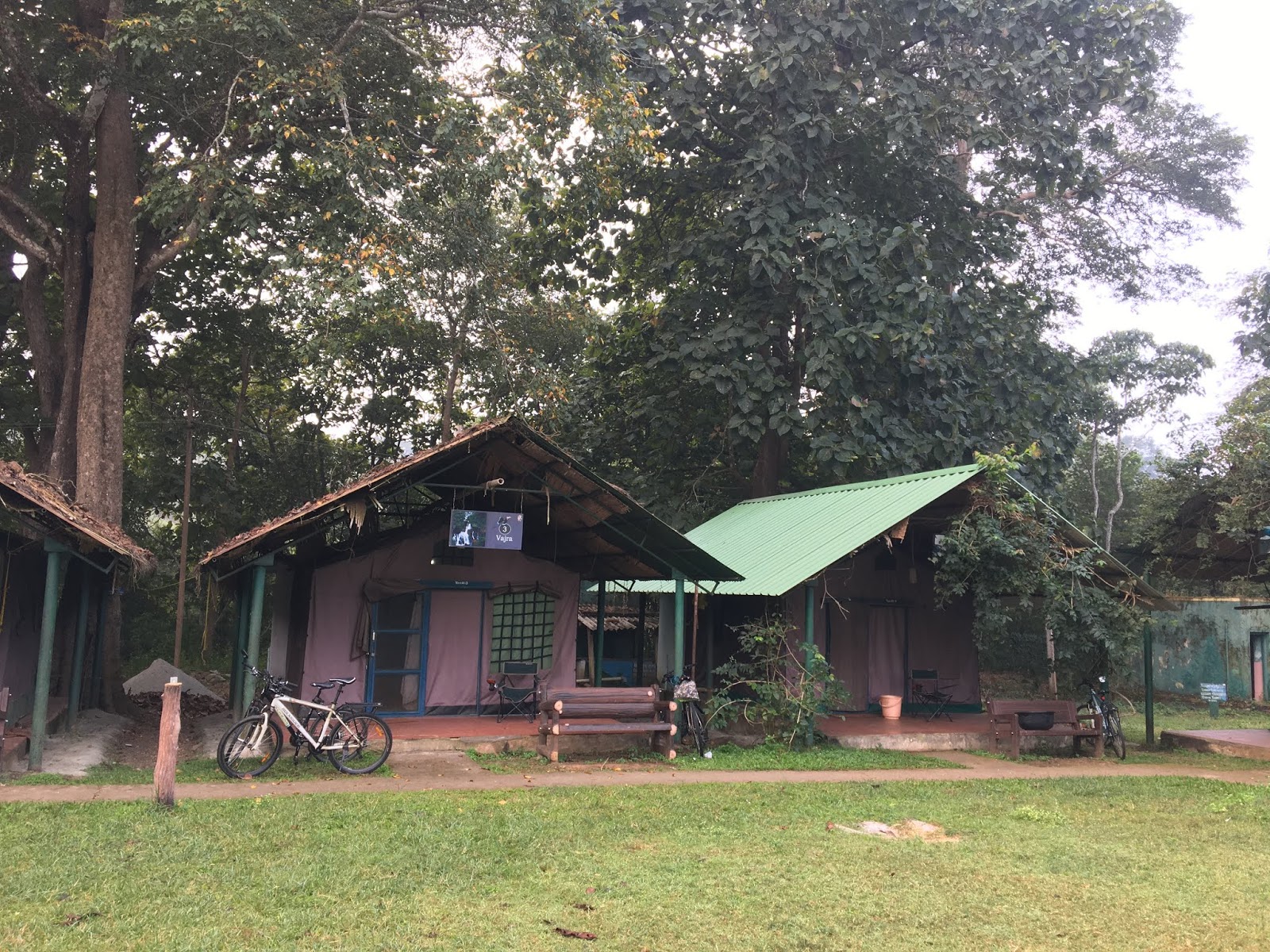
| Thanks to Divya Mudappa and TR Shankar Raman for remembering which sapling I planted two decades ago! Thanks Tanaya Nair for the photo. |
This blog is a large canvas I pin with my stories and experiences with people, places and nature
An ode to a tree
A Dueulogy
I always nap in the afternoon when home in Goa. This afternoon I woke up with the shock of knowing that Suresh Jones—a dear friend, founder of the Loris organisation, inhabitant of the 'Marlboro country' in Madanapalli, keeper of the Eastern Ghats in Chitoor district, a knowledge repository of the biodiversity around Madanapalli and Rishi valley, and above all a very kind human being—is no more. In fact that he had passed away a week ago. Recovering from this shock I realised that it is important to pen down a few words remembering him even if I am a week late. May his soul roam the Eastern Ghats which he fondly loved and took care of.
I was in touch with him once every month at least and knew that he was unwell for a while and was visiting Bangalore for kidney dialysis. A few months passed without calling him, and I kept telling myself I need to check on him, but alas I am more than a week late.
I have fond memories of visiting him from Bangalore. I once rode up to his place from Bangalore on a bullet bike I borrowed and a few times in my car. As we would reach his home, he would lay out in excitement the wonderful plan ahead. For dinner, there would be the secret ancestral recipe of garlic-pepper pork with just five ingredients and rasam. We would bring a few beers back home towards the evening and of course an evening walk was always planned through Marlboro country, a landscape that had rocky hillocks sprinkled with shrubbery with millet and rice fields around.
We would chat about music, nature conservation, wildlife, our dogs and other pets, and life in general and then in the night look at the sky while closing up a beautiful day. Although I have a bunch of memories of a dozen visits at least, I feel I need to think hard to come up with the details: the sightings of the yellow-throated bulbuls, visiting the caves and caverns, his long descriptions of the geological faults on the rocks, the myriad plants along the way and their scientific names, one that literally stands out is Shorea roxburghii, which is largely restricted to the Eastern Ghats.
In all, with his passing I further realise how fragile life is and how much we need to cherish what we have, acknowledging things out of our control and commiting to trying to do the things that are indeed in our control. I hope you roam the Eastern Ghats with the yellow-throated bulbuls, the lions, the four-horned antelopes and Shorea roxburghii trees Suresh. I will always remember our wonderful times together and how kind and affectionate human being you were.
The gentle giant with a heart of gold
A friends family arrives to my Goa home every year during the new year eve. We play a little music, we discuss life, we visit a Japanese restaurant for lunch, we grill some fish and vegetables for the eve, we dry some coconuts and make oil, and sometimes we exchange musical instruments. I gave Mallika my guitar for a year couple of years back, I gave Mallika and Gokul a few drum lessons and sold Gokul drums last year, and this year Mallika left her guitar for me.
Trying to play a song a day, three days back I tried the song 'Heart of Gold' by Neil Young; turned out quite nice. Shared it with a few friends on a WhatsApp group of close friends whom I have known for two decades at least and for some reason I asked them to share their music and other creative experiments too, "Life is short" I told them, with no apparent context.
The next day we hear that one of the friends in the group Ashwin is no more. Passed away in Valparai, Tamil Nadu. Most of us on that group and many other folks who have known him are in shock and disbelief. He was one of the nicest, warmest, kindest persons I know. I had met him in Mysore around 2010 and we shared some pork recipes, few beers and some field tales. I visited him at this field station from where he was monitoring and helping mitigate human-elephant conflict for years.
As I absorb the tragedy and come to terms with life, I do realise something even more deeply what I've known and was aware for years. If you have a wish list, a desire to do something, a craving to learn something new, an old friend to catch up with who you have forgotten for a while just because life came in between, a desire to get healthier, want to try running a marathon, or anything else, do it Now! For years, I have been wanting to get back to writing and the inertia just kept it that way, but this shock has made me want to pursue everything I have been thinking I will do tomorrow, next month, next year, now.
Life is indeed short and this man with a heart of gold will always live in my memory.
Lows and highs—ebbs and tides—fall and rise
The sea water during high tide on a beach gushes in loudly and surprises me with how high it rises. It moves in slowly but reaches out far in and grasps as much sand and other substrate as it can and drags it back. Then, there is a lull that lasts a brief moment. Apparently, it is possible to realise this lull, to even hear the silence, before the tide turns. Within a few seconds, the low tide begins and slowly the water recedes, till the next lull and the next high tide—an infinite cycle.
My mind works in the same way, in as far as I have known. There is no way for me to find out if it works this way for others too. There is a period of a lowest-low and then slowly the rise begins. In this phase, I can usually accomplish a lot more things than I expect of myself. And for both these, I have triggers. Having lived with this cycle as long as I have been around, I have started documenting what the triggers are. For several years, I was grappling with the lows; calling them blues, depression, listlessness, lack of motivation, and other similar words. I am still dealing with them, but I am now more aware of the patterns. There are highs and lows and brief peaceful moments in between and there are triggers for the switch between the phases. As long as I am aware of this chaology, I can address, a few times avoid, and at other times even remain calm through a storm. In the chaos lies the peace within; and it is inevitable for me to embrace it.
The triggers must differ for others but a run, a long walk, some time spent gardening definitely can tip my mood from a low to high or a good one to better. Writing, definitely helps too as you possibly figure seeing this blog and its posts! In any case, being aware of each of these phases and knowing that the tide will turn for sure is immensely useful.
I look
forward to writing more often on my blog this year; see you back here in a few!
![]() |
| Rex takes me to the sea everyday. |
A legacy lives on
The first time I met Yoayella, whom I affectionately call Yoyo, was during Elrika's month-long seagrass survey around the main Andaman island. A small humble, ever-smiling, strong, and hard-working person from the Karen community from Burma. He has been working with Elrika for over a decade. After several tiring snorkeling sessions, he would still have the energy to go back into the water and spearfish.
To see him spearfish is other-worldly! He would wear a mask, snorkel, and fins and dive down with a spear, descend and often wait behind a large rock for a shoal of fish. Snap a grouper, hook it to a line, and continue—business-as-usual. There were five of us on the boat, so two big fish or three smaller fish would be what he would target. By the time I've taken several long breaths at the surface, Yoayella is still waiting behind a rock; I was just probably breathing more just looking at him holding his breath that long! Corals with several colours, hundreds of fish, the sunlight diffusing from above to the seabed, an occasional big fish or a big shoal of small fish, and Yoayella spearfishing, all make a fascinating sight. It is a vivid memory I just need to close my eyes to recreate, no photograph needed.![]() |
As we donned our equipment, Yoayella casually took Kane to the sea wearing a mask himself and with another one for Kane. While I walked so delicately on the slippery rocks to reach the sea, Yoayella was already there in 5 feet of water with his kid hopping from one rock to another and now Kane is piggybacking over him and Yoayella is talking to him and taking short dips into the sea and getting Kane acquainted with the sea. Sometime later, he was teaching Kane how to swim as well, basically telling him everything Kane needed to know to get comfortable in the sea. Kane is about five years old and already getting familiar with this habitat that comprises a big part of their lives. I imagine he will get better at it with time, maybe he will spearfish in a few years too. Someday, I'd like to watch him from above, admiring what he's doing, much like his dad.
| Photo by Evan Nazareth |
A Noble island
Imagine firstly a ten-hectare wooded parcel of land, next imagine it's an island with hardly any people living on it and very few inhabitations around the island, so in the night the sky lights up with stars brighter than the horizon. Add to that mango, jackfruit, betelnut, pepper, and coconut plantations, to name a few, and a beautiful home to stay in. Lastly, add a house at the end of a pier, only accessible by a boat, following the 2014 tsunami. That's precisely what the Noble island is—that and a lot more.
We had a day to spend at Port Blair and we asked Tanaz and Shiraz Noble if we could visit the island they own and kayak around it and they were happy to take us. What followed was a drive across half of Port Blair town to an approach point where the boat awaits to take us there. Right at the approach, things change drastically; plastic waste and rubble piled up close to the approach but as you walk the last few metres close to the waiting boat, things get serene quite immediately. There are only the sounds of the mellow waves and the view of Rhizophora and their majestic aerial roots at the edge of the Noble island; they look a bit like J R Tolkien's ents with long roots as tall feet.
Once we got to the island, Tanaz and Shiraz briefed us about the safety issues related to kayaking and how to make the paddle strokes hydrodynamic and efficient. Crossing the 10-degree channel, from Barren island to Havelock, and Rangat to Havelock are just some of Tanaz's amazing kayaking feats. Off we went for a short tour of the island.
Paddling correctly took a little while. Mahesh Sankaran was on my kayak and quite often our paddles would bump since we were not synchronised, but soon it all came together. Often, we paused to hear the enthusiastic information about how to identify and understand the different mangrove species; there were two species of Rhizophora, which are often at the mangrove front since with aerial roots they can tolerate higher tide variations than other species, a species of Avicennia found closer to the shore and Sonneratia species with snorkel roots, Ceriops with interesting 'knee roots', and Bruguiera, also with short knee roots. Often, while identifying terrestrial species, we look at the bark and leaves but with mangroves the roots themselves are a great starting point. This information will certainly change the way I view and understand a mangrove forest in the future.
After an hour or more of kayaking occasionally seeing the kingfishers, the whimbrels, the teals, and mudskippers we took a look at the house on the farm. It had solar lights, rainwater harvesting, wifi, a kitchen complete with all necessities, a large 'working' room, and a bedroom, overall, a dream home!
We spent about three hours in all in the island, and on the way out got a look at the 'water house' that is only accessible through a ferry, another basic house with a fantastic view and vibe. Someday, would love to stay there and appreciate the view, the waters, the forest, the plantations, and the island more. Until then, it is nice to know that such a 'noble' island exists!
Do take a trip to the island to see the ents and the other plants and the birds, and experience the calm of water and the conversations with the lovely people.
Island in the Sun
My last visit to the Andamans was more than three years back. Elrika and I had gone north for a while to Mayabunder and villages around such as Webi and Karmatang. But I vividly remember the first trip ever to the Andamans in late 2016. The plane flew from Bangalore for about two hours with no captivating scenery other than a quadrillion clouds, and then the pilot announced the descent, and minutes later I saw the sea, the sand, the lagoon, and then thick-as-a-brick forests. I thought we reached the main North Andaman island, but we were right above the North Sentinel island, where the Sentinalese live; one of the rare uncontacted places in the world. The community lives there on their own with no contact with the rest of the world; no roads, no distinct cultivation patches, no visible homes, no signs of clearing, and even no visible boats! The feeling I got was unexplainable; I wondered what they grow, what they eat, how their language sounds, and in general, how their lifestyle is. A closer look through google earth does show up some walking paths, few clearings, but no signs of houses and boats.
![]() |
| The view that one gets from the plane as one approaches the North Sentinel island. |
Last evening on a conversation with Evan in Port Blair, I got to know that the Sentinalese started using metal tips on their arrows, shifting to metal from stone following a ship-wreck in the North-west part of the island. Evan said that he had heard someone mention that the ship-wreck transformed the community from the stone age to metal age! I wonder if they do light fires for cooking or clearing land; would be fascinating to look at high resolution imagery from the island.
Back in the larger North Andaman islands, the plane descended further and got closer to the main island; few houses, many clearings, and visible signs of concrete, plastic, and metal, but the forests around still seemed thick and enveloped in fluffy-cotton clouds. When the plane landed and in the next few days, I realised what being in an island implies. Things arrive here but never go back. So, all the plastic and glass waste stays in the island, so it is even more important to be conscious of the everyday miscellaneous items we use. On that note, I wonder; the whole planet is an island too, things that we use are manufactured, but there is no other place to discard than in the planet itself. Except, then there is space debris, which we are also responsible for!
The people you meet here in the Andamans are from all over the country; its a motley blend of cultures, people, cuisines, and languages. Different people arrived here at different times brought by the British, the Indian Government, the Forest Department, as well as the army and the navy. So, it is not uncommon to catch an auto run by a Tamilian, eat food at a Chinese restaurant, buy bakery items from a Keralite-run shop, snorkel with a Karen spear-fisher, and then have dinner at a Bengali restaurant, to name just a few of the options. Hindi is a binding gel for everyone, and the Hindi language has evolved as a mix of a number of other languages; a mainlander would not have a clue about some of the words (take 'Gusul' for example!), that could have been borrowed from any part of the country and blended into a local mash of language. Its all very interesting to me.
Things got even more interesting as we went north to villages around Mayabunder. The dominant community there is the Karen. The Karen were brought over during the British time since they were experts at training elephants to harvest timber from the forests. The elephants are still here too; several herds of 'retired' elephants inhabit the islands and have turned feral. Besides elephants, there are spotted deer, barking deer, domestic cats and dogs, pigs, bull frogs, that are found in large numbers in both human-inhabited and uninhabited islands.
Tomorrow, we travel north again to Mayabunder, Webi and Karmatang. Will log in more from there.
![]() |
| I sit here and write this post; its difficult to sit peacefully here and not write something! |
How the kombucha culture diffused into my life!
The month was March 2020 and it was late into the month. The Prime Minister had announced a lockdown to arrest the spread of Coronavirus and bolstered this effort with plate-bangings in the evenings. Places were shut and groceries were a big issue here in Candolim, Goa. Beverages were out of the question. We store a few litres of Urak (Cashew alcohol, first distil) every year which we buy from a home in Revora, North Goa where they make a good brew. Last year's supply was over and this year's stock in Revora was consumed by the locals since booze shops were shut.
Cycling trivialities - Part IV: In the Ghats
At Ganeshgudi, we passed by
the beautiful Kali river where we decided to break for lunch. During
lunch, we pondered if Matty should put his bike on to a car and take
it ahead to Castlerock since the ride was getting a bit tiring with
all the ups and downs and his ‘non-broken-in’ leather
seat. | Picture this with a foreground of a tree with a great hornbill and a giant squirrel helloing each other! |
Cycling trivialities – Part III: The climb begins!
![]() |
| The roadside eatery that came highly recommended! |
![]() |
| The 'unbroken' seat of the Surly! |
| The stream where we got pedicure and Patil a power nap |
![]() |
| The trail Matty was on led to a pond! |
After that we slept like we 'sold our horses'! Next day was a ride to Castlerock, a place I was very excited to go since I had only seen the station from the train on the Goa-Bangalore route close to Doodhsagar and the forests around, full-of-cane, are a treat for the eyes; also, something very curious about the name of the place too! It was going to be a ride of only 60 odd km but very undulating; the cleats on my shoe-soles are going to help me pull up the pedals on the upslopes!
Cycling trivialities - Part II: A ride in the plains
| Panniers that I forgot! |
| Our own Mohammad, the long-distance cyclist! |
| Mathew getting his super-model Surly ready! |
| Panniers that I carried! |