Showing posts with label Pakke. Show all posts

A day with the Great hornbills and their great protectors!


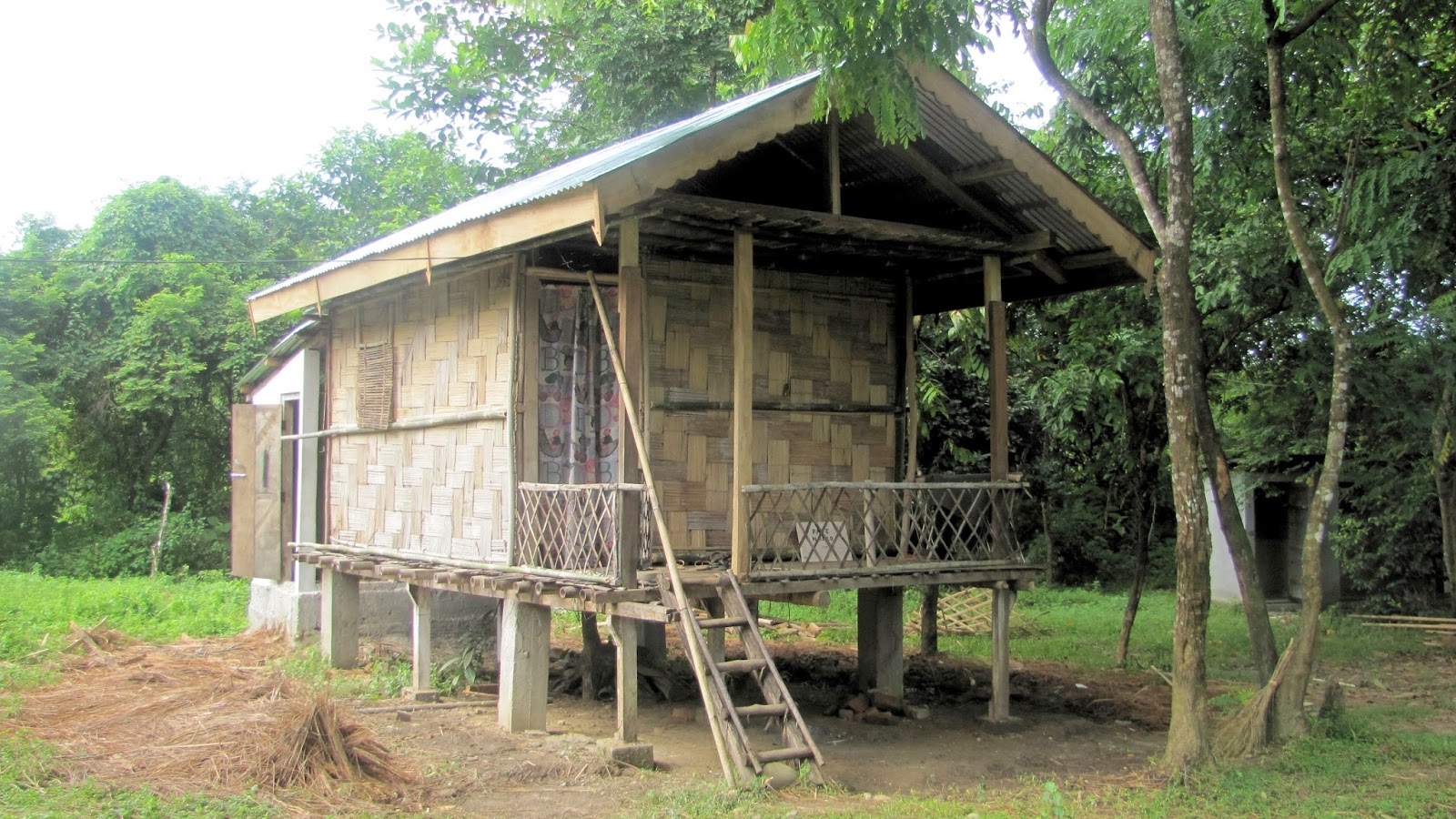
Its not any day that one begins in a crowded city like Bangalore and sleeps the night in Arunachal Pradesh! And its even rarer to sleep the same night in a wildlife sanctuary in Arunachal Pradesh! One day in September, I reached Guwahati by 11 in the morning after a two and a half hour flight and then travelled on a four-wheeler to Tezpur, then on to Seijosa to finally reach the Pakke Jungle camp at about 10 pm. This camp is run by Help Tourism and the local Ghora Aabhe Society, and is supported by the Forest Department and Nature Conservation Foundation. I stayed in a modest bamboo house on stilts and slipped into a restful sleep with the lullaby-hum of a river closeby.
The morning in Pakke began with the familiar calls of the hyperactive Great Barbets. The cicadas too were already calling tirelessly and the swifts were collecting their breakfast from a mid-air buffet. It had rained all night and the morning seem to begin only lazily, but finally at about 7 am the sun did pierce through the clouds. With all this happening, the feeling that I was indeed in Arunachal was still only slowly seeping in.

Aparajita Datta was travelling to the Pakke Wildlife Sanctuary for a meeting of the Hornbill Nest Adoption Programme and I had accompanied her. The programme, initiated in January 2012, aims to protect hornbill nests around Pakke by forming a unique collaboration between the Nature Conservation Foundation, Nyishi tribal headsmen from villages around the Pakke Wildlife Sanctuary who identify and protect nests, the State Forest Department and urban citizens who fund the programme. In the meeting, a summary of the 2012-13 program success was provided, the next years activities were discussed and the nest protectors were gifted t-shirts with a Great Hornbill embroidery. It was heartening to see that the local Nyishi protectors were also taking lot of interest in the initiative. Below they all got together for a group photo. The first photo was a serious one and then the old man in the bottom right wearing the hornbill t-shirt said something funny and everybody laughed!


In the evening it was time to see the hornbills! We visited the Kameng river and were treated to a view of twin rainbows with the sanctuary in the background.


The other side of the river was beautiful too, it was a collage of clouds.


Just before sunset one can catch a glimpse of Wreathed Hornbills flying to their roost sites for the night. While we waited there for about 45 minutes we saw more than 15 hornbills, some in pairs and some in groups of three or more crossing the Kameng river to reach their roost sites.


Interestingly the hornbills roost in the night at the edge of the sanctuary where deforestation is relatively high and where they are also vulnerable to hunting by the locals. But for now, it seemed like the hornbills were safe due to the efforts of the Forest Department spearheaded by the Divisional Forest Officer Tana Tapi. Mr. Tana Tapi has been awarded several awards such as the Carl Zeiss Wildlife Conservation Award 2010, the Earth Hero Award, 2010 and the WWF-Bagh Mitra award, 2011 for his efforts in Pakke. The day ended with an acute sense of hope for the hornbills in Pakke owing to the relentless efforts of the likes of Tana Tapi, Aparajita Datta and others at Pakke. 

Pakké rocks

Finally back in North-east India, so the blog continues! I have not been posting very often since wasn't here and I did not want to change the main theme of the blog! This time before heading to Itanagar and then on to Bomdo village, I am at the first stopover at Pakké Tiger Reserve where my colleague (Amruta Rane) and her team are doing the tiger census which is going on right now across the country. This is the best opportunity to get into a Tiger Reserve and that too on an on-the-house trip, well actually, on-the-Forest-Department trip! But firstly, about what happened before I got here.

Guwahati, the dust bowl of North-east India

Guwahati, the main gateway to north-east is quite a town: crowded, tambul (betelnut) chewers and spitters everywhere and now multiplexes and big malls. Its like a small city mimicking a big one out here. Another annoying thing about the city is the dust-bath, smoke and dust everywhere, and if you are anywhere near Khanapara, if you ever are, cover your face with a kerchief! Its like you take in dust in your nostrils before you take the smell of a forest anywhere beyond Guwahati. In fact, the only good thing about the place is that bus fare from anywhere to anywhere ranges from 3 to 5 rupees, and its been that way for almost four years now.

Anyway, I spent three days at Guwahati before I got to Arunachal Pradesh, not by choice, as you will read. My good friend Narayan's family has adopted me over the last few years and treated me as one of their family and taken me in whether I am headed to Bangalore or whether I am headed to field like this time. There was even once a tiime when I had a rupee left when I got to Guwahati since I had expected a bank to be open at 5 pm, it wasn't. So with all my luggage, which usually exceeds 10 kilos, I walked, to be specific from Bangagarh to Khanapara, almost 8 km! But when I got to Krishna bhaiyya's place I was treated like I would be at home: a hot water bath and a super-sumptous meal. But coming back to the topic of why I had to spent three days in Guwahati, I needed to apply for an inner line permit (ILP) for entering Arunachal. When I was earlier working with G B Pant Institute at Itanagar, I had a 1-year, all-Arunachal ILP, but this time to get a 1 week ILP to a single destination (in this case, Seijosa, the entrance to Pakké Tiger Reserve), I had to wait two days! Felt a bit sick, but hey, here I am! The first day in Arunachal began at Pakké, which brings us to the main topic of the blogpost.

A sort of field-coming

After many months down in South India, it feels great to be back in the beautiful forests here. I got to Seijosa and within half hour was to leave for the Panch-iali camp in Pakké, where one of the five roads that lead to nowhere leads to the beautiful camp in the forest! First glimpse of Arunachal after almost a year, beautiful! The great barbet call was on which usually provides the timely beat of the sounds of the forest, nice lowland forest right in front of me, Duabanga, Erythrina and Toko, the local palm used for thatching, were flowering and yes Pakké rocks, they really rock. Each is a different colour, shape and has a different texture.

Pakké rocks
Pakké rocks!

Pakké rocks
A khaleej and junglefowl
We also saw several Khaleej pheasants and red junglefowl and on one occassion even together, wonder what that was about.

Then we took on the survey, this usually involves looking for pugmarks around nallahs, or streams. The first day we saw pugmarks of two tigers, at least one leopard and some wild dogs too. The second day, today, was one of the most beautiful walks. Often, we saw the Oriental Pied and the Wreathed hornbills and very often we would hear them flying over the canopy with a muffled Chopper-like sound. In all, we saw about 5 Wreathed hornbills and 3 Oriental Pied ones, all in a couple of hours walk.
I also took a bath at a stream, with some Puntius and Leopard Loaches. A stream bath after a dust bath at Guwahati, awesome!

Pakké rocks
A leopard loach

Charan da the person driving us to Seijosa also told us something interesting. There was this mammal that used to defecate in the same place for the last few months, according to him a cat. I couldn't think of a cat that does that and then he even took us to the place. Here is the picture of the scat.
 
Pakké rocks
Possibly civet scat


So Amruta and Charan decided that they would leave a camera trap at the place and perhaps pick it up in a week. So we may get picture of this toilet-homing carnivore. I am really looking forward to what it might be, maybe I will write about it in a future blog post.
 
In all, truly, Pakké rocks!

PS: The cat stopped visiting its personal lavatory after they fixed the camera trap. Most likely a civet, sorry for the loss of a loo!