Field this time...

A month back I had packed for a field trip in north-east India for about 45 days, and after several trial-and-errors over several years, I think I got the packing right! 

A pillow I bought during a train journey gets filled up with air every night and ensures I sleep well. A marmot sleeping bag that my awesome boss gifted to me keeps me snug. There is a small heating rod, coffee powder and a steel filter that get together in the morning and wake me up.

The equipment is another story. A multi-plug which can convert one plug point to three is extremely useful while travelling. A smartphone has been indispensable in field; it has a gps, google earth, google maps, Birdlog Asia, an offline dictionary, compass, macro and landscape camera, music, internet, voice recorder, a torch, a pdf/book/document reader. The only problem with the phone is that the battery lasts only a day; so I carried back up batteries which even get charged with a small solar panel. This phone was backed up with a black-and-white Nokia phone which has a long-lasting battery. I did not know this earlier, but Airtel seems to have as good coverage in the north-east as BSNL or even better; and the internet is great, so Airtel is highly recommended if you are travelling in the north-east! At Goalpara, I got internet speed in excess of 250 kbps and I had downloaded the Ubuntu ISO, which is about 1 GB in an hour by tethering the smartphone to my laptop! There is also an amazing Bose Bluetooth speaker that ensures a lovely musical evening, when we have the time for such things!

Since I am still recovering from a surgery and need to get my legs stronger, for exercise I am carrying a black T-resistance band which is very useful. I still remember the trouble I went through carrying 4 kg ankle weights to Arunachal and back! The T-band is very portable and one can be very innovative with the exercises too. All this together weighs less than 20 kg which ensures at the airport I don't need to pay a rupee extra for luggage! While I write this the Bose is playing Coke Studio Pakistan music and the evening is mellow with a drink. Today I am very close to Bangladesh in Meghalaya overlooking the Goyain river!

A day with the Great hornbills and their great protectors!


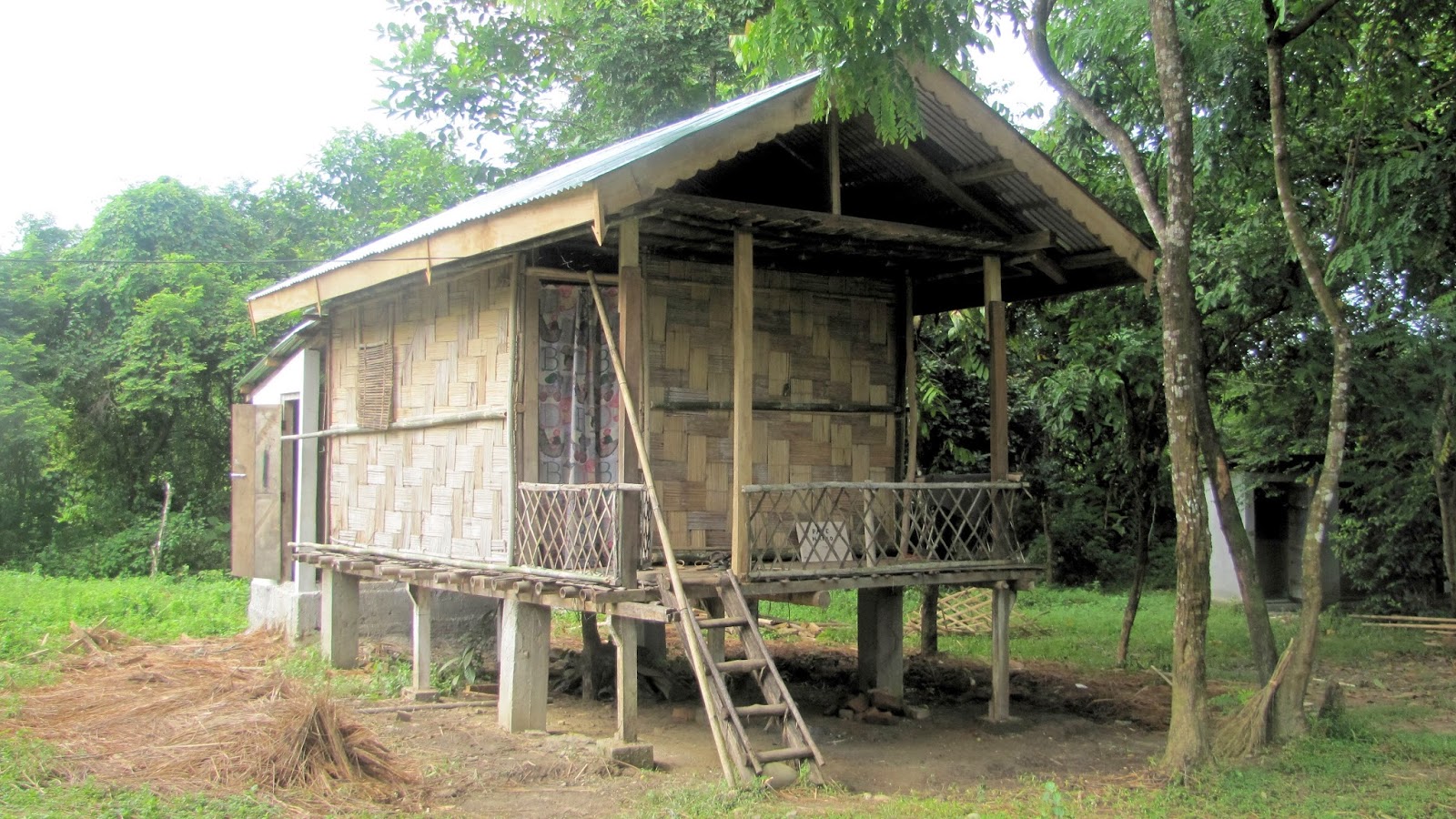
Its not any day that one begins in a crowded city like Bangalore and sleeps the night in Arunachal Pradesh! And its even rarer to sleep the same night in a wildlife sanctuary in Arunachal Pradesh! One day in September, I reached Guwahati by 11 in the morning after a two and a half hour flight and then travelled on a four-wheeler to Tezpur, then on to Seijosa to finally reach the Pakke Jungle camp at about 10 pm. This camp is run by Help Tourism and the local Ghora Aabhe Society, and is supported by the Forest Department and Nature Conservation Foundation. I stayed in a modest bamboo house on stilts and slipped into a restful sleep with the lullaby-hum of a river closeby.

The morning in Pakke began with the familiar calls of the hyperactive Great Barbets. The cicadas too were already calling tirelessly and the swifts were collecting their breakfast from a mid-air buffet. It had rained all night and the morning seem to begin only lazily, but finally at about 7 am the sun did pierce through the clouds. With all this happening, the feeling that I was indeed in Arunachal was still only slowly seeping in.

Aparajita Datta was travelling to the Pakke Wildlife Sanctuary for a meeting of the Hornbill Nest Adoption Programme and I had accompanied her. The programme, initiated in January 2012, aims to protect hornbill nests around Pakke by forming a unique collaboration between the Nature Conservation Foundation, Nyishi tribal headsmen from villages around the Pakke Wildlife Sanctuary who identify and protect nests, the State Forest Department and urban citizens who fund the programme. In the meeting, a summary of the 2012-13 program success was provided, the next years activities were discussed and the nest protectors were gifted t-shirts with a Great Hornbill embroidery. It was heartening to see that the local Nyishi protectors were also taking lot of interest in the initiative. Below they all got together for a group photo. The first photo was a serious one and then the old man in the bottom right wearing the hornbill t-shirt said something funny and everybody laughed!


In the evening it was time to see the hornbills! We visited the Kameng river and were treated to a view of twin rainbows with the sanctuary in the background.


The other side of the river was beautiful too, it was a collage of clouds.


Just before sunset one can catch a glimpse of Wreathed Hornbills flying to their roost sites for the night. While we waited there for about 45 minutes we saw more than 15 hornbills, some in pairs and some in groups of three or more crossing the Kameng river to reach their roost sites.


Interestingly the hornbills roost in the night at the edge of the sanctuary where deforestation is relatively high and where they are also vulnerable to hunting by the locals. But for now, it seemed like the hornbills were safe due to the efforts of the Forest Department spearheaded by the Divisional Forest Officer Tana Tapi. Mr. Tana Tapi has been awarded several awards such as the Carl Zeiss Wildlife Conservation Award 2010, the Earth Hero Award, 2010 and the WWF-Bagh Mitra award, 2011 for his efforts in Pakke. The day ended with an acute sense of hope for the hornbills in Pakke owing to the relentless efforts of the likes of Tana Tapi, Aparajita Datta and others at Pakke. 

Memories of Garo hills

In the year 2006, I had applied for a job in South Garo hills, Meghalaya and having got the job I was really excited to move to north-east India from Bangalore. I have always lived with my parents and had never been away from home for more than a couple weeks. But here I was, a South-Indian coffee-drinking non non-vegetarian relocating to a site in north-east India, that is relatively far from home, where coffee was unavailable and vegetarian food often tastes bland! But hey, I was excited and motivated and that was the most important thing. Often, the lack of these is the reason one cannot enjoy situations one is not accustomed to.

After an overnight journey from Guwahati, morning had begun in West Garo hills. The long winding road passed through a swathe of thick forests pockmarked with betel nut, cashew nut, orange plantations and shifting cultivation patches. I had visited parts of north-east earlier, but I had a little idea of what to expect from South Garo hills. By the time I reached Baghmara, the headquarter of South Garo hills district, I was delighted to see the Simsang or the Someshwari river, sandy beds along the river, forested hills on the other side of the river and to hear gibbons calling from the forests was an icing on the cake.

I settled in quite quickly. I was shown the room in the office where I would stay and then I met the cook in the kitchen whose expertise was Alu parathas for breakfast! The thing was that in Garo hills, the Garos eat only two meals a day; one heavy breakfast and one heavy dinner. In between, they eat a snack of boiled tapioca or yam or oranges or bananas or anything that they often grow locally. The job that I took up involved field work in the community forests around the villages in the landscape for at least half the month. So, during field work, I would eat two meals a day in spite of the hard physical work of walking around the hills in South Garo hills and while I was in Baghmara, not doing much of physical work other than the walks I used to take around the town, I used to eat three meals, since three meals were cooked by our cook. So after a month or so I decided that it wasn't working, I shifted to two relatively big meals a day. Thus adapted, even today I can eat just two meals a day. Its also a good practice since then you really look forward to the meal and enjoy the food too.

The problem of being vegetarian wasn't a big one since in the office in Baghmara, we had a cook. But during field work in the villages in the region, I had found it difficult to cope. On one occasion, after a whole day's walk along the forests around a village, we bought some vegetables to take to a home who would cook for us a meal. Since I had eaten only a single meal in the day, I really looked forward to that meal. The food came while I was stuck in a thought about why the kitchen was smelling so different, and I had even nailed down what it could have been, rotten fish! I started eating my food and realised that my field assistant had bought some dried fish to spike our food with protein. For a vegetarian to eat meat or fish when he is starving is one thing, but eating dried fish without any initiation is completely different! I hardly ate even the gravy since the entire dish raked of the smell. Thankfully, there were bananas, I ate lots of them and slipped off into a well-earned sleep.

By the end of the six months in Garo hills, I had turned into a non-vegetarian with no exceptions. But dried fish I only started eating a year ago, and in fact enjoy it too. A South Garo hills delicacy was the eel curry. Cooked in its blood, I still don't remember eating fish that tasty after seven years now. My field assistant and I were also on rare occasions treated with the local chicken at some villages.

After about three months living in the office in Baghmara, I decided to have my own home. It was by the Simsang river, the sandy shore began after my window and the wind and the view were overwhelming. A minor issue was the cooking! For the first time in my life I was going to cook for myself and by the end of the three months living by myself I had learnt quite a bit. I even brewed my own filter coffee! Milk came from a milkmaid can and cheese cracker biscuits were often the breakfast. All in all, those times in Baghmara were a precursor to my times in north-east India later. I will always be fond of those memories and will always consider Baghmara as a stepping stone to my experiences in other parts of north-east India.

PS: I was lucky to have a film camera then, am posting here scanned pictures from the times spent there.

Garo kids enjoying a game of football on the banks of Simsang river

South Garo hills is twined with several streams. During tiring field work along the streams, the best break was to take a dip!

A view of the bridge over Simsang river from the office. During tiring desk work, the best break was to climb up the hill we were on and take in the view.

A Garo kid in Panda village adjoining the Indo-Bangladesh border

Friends from Garo hills, Fernando to my left and Ericstone to my right, yes his name was Ericstone, he also had a friend called Rolling Stone!

This was my room with a view for three months in Baghmara

The star of the hills!

The trigger to purchase a motorbike about three years back for my field work in Upper Siang district in Arunachal was an interesting one. After being ridden about 20,000 km in the hills, this bike was sold today to a friend from Bomdo village for a very reasonable price. Cut to three years back, I had landed in Pasighat from Bangalore with all my bags packed and hoped to catch the State Transport bus from Pasighat to Tuting which would pass through the Bomdo village, my drop point. I knew that at least once in three days, the bus would undertake the arduous journey till Tuting covering about 400 km which forms the breadth of the Arunachal Pradesh State in that region.

I waited for two days and then learnt that the bus engine had seized on the way and that it will take a few months to get the bus repaired. The alternative was to take a Sumo to Yingkiong on the other side of the Siang river, stay there and then walk the last 35 km (the walk) or get a top-of-the-sumo ride till Bomdo. I wasn't in the mood. I figured the best thing to do was to buy a two wheeler and ride it up to the Bomdo village. It was a brilliant decision since buying a two wheeler is usually a mere three step process: figure out the budget, select the model and pay for it! Except I was in Pasighat where several more steps were involved.

The Pasighat ATM scene deserves a special mention. At that time, three years back there were two ATMs, one was permanently dysfunctional and the other had timings governed by sheer randomness. Therefore, if at all it was open the queue would be remarkably long. And on the wall to the side of the machine, it is written male 2: 1 female. Takes a while to decipher that it means the women have a separate queue and after two men withdraw their money which can take anytime between a minute and infinity, a woman can withdraw money which can take again between a minute and infinity. But the ATM on the whole has a very pleasant atmosphere; pin numbers are shared to be entered onto the machine, jokes are cracked about no money being in the account but one still being unable to withdraw any money, about even the fact that the atm is open and that the machine is functioning. Once, in Yingkiong, a local in anger that his money was not being withdrawn had forced in a bamboo piece into the atm slot maiming the machine for at least two weeks before it got repaired! Overall, money withdrawal at most ATMs in small towns is a pleasurable group activity and the only people who are in a hurry are the ones trying to buy a two wheeler to reach their field site. It took me three days to withdraw the amount required for the purchase since there are also limits to the amounts one can withdraw in a day.

Earlier I had visited a TVS showroom to look at the bike models and had selected the only one I could afford; the Star City; the highlights of this bike were awesome mileage, is quite affordable and runs like a charm in the city. Wait a minute, 'only city?!' I wondered. Well I had no choice; I could afford it and the nearest petrol bunk to the bomdo village was 40 km away, so Star City it was! On the third day of my withdrawal symptom at the ATM, I purchased the bike and headed off the next morning on the 220 km ride to Bomdo.

The bike ran quite smooth, alas it had no clue that it would never see a city in the plains again. Once a friend from the neighbouring Ramsing village chuckled 'your bike must have had a bad dream the day before you bought it!' This bike has travelled twice to Tuting and once further on to Gelling the last village on the Indo-Tibet frontier, to Pango village, north of Bomdo and innumerable times between Bomdo and Yingkiong. Some of these travels you will find here in the blog. Anyways, now the bad dream of the bike continues since I sold it to a local there and the rides in the hills will continue for several more years, although I do think the Star City does enjoy more these rides than in the plains! Almost everyone in the village wanted to buy my bike and there were parallel biddings going on. But my friends from Bomdo convinced me to sell it for a low price to Nyomrang, a bachelor, for whom they thought the bike would help immensely to find and impress a right bride! Here are some pictures of the Star of the hills...

This was from Pango village, notice the two male Takin horns that were given to my field assistant by his cousin, Star city, definitely male!

The time we were stuck in front of a small landslide, we pushed the bike through this and got away!

There were spots around the village where me and the bike could bathe together!

...and friending the fern

This post follows from the previous post 'gilding the lily'.

The Adis from Bomdo village seldom clear an interesting plant from their shifting cultivation fields since it is believed that the plant retains moisture in the fields. Locally called Asi Gebinyé (the one that brings water), Helminthostachys zeylanica has been reported as a medicinal plant from other sites. The fronds are reported to cure acute back pain caused by sciatica, and are also used as a laxative, intoxicant and painkiller whereas the rhizomes are used in treating dysentry, sciatica and malaria. However, the Adis retain the plant as they believe it helps their agricultural production by retaining soil moisture in the site and are pleasantly unaware of the medicinal uses of the plant!

Sketch of the species from this book


This year, the rains in Upper Siang district were relatively poor and the Bomdo villagers were concerned about their crop harvest. Then, about five weeks ago, a group of villagers went deep into the forest and cut a particular plant, locally called 'Alu layan' which is believed to cause rain. For almost a month after that it rained continuously!

To me this worldview of a remote farming community within which different plants are used based on the community's knowledge or belief systems tailored to the local needs is very interesting and I hope to document many more such adaptations. There is also the Aconitum ferrox plant, locally called 'Omo' traditionally used as poison for their arrows used for hunting, there is the tree, the bark of which is used as fish poison, a palm as well as a tree fern, the pith of which was traditionally consumed during times of food scarcity, lots more to write about and you will soon find information about these here in the blog.

The great crossing

May is not the best month to be around here in Upper Siang Arunachal. The rains that go on for almost the entire month nudge the lands to slide blocking roads, sometimes for weeks on. May this year, however, is even worse. With the Zilla Parishad elections going on here my field assistants don't have the time to tag along for field work, in fact they don't even have time to do their own work. Most of the villagers including the young and old are in high spirits through the day and often through the night. But thats a story for another time. Today was a day Roy and I were going to reach the Bomdo village from the Yingkiong town, the headquarter of the district, a distance of only 35 km. But there was a river to be crossed, the teeming Siang river. And we could see the rain approaching us two hills away.

The rain approaching us two hills away (Photo by Anirban Datta-Roy)

Usually we use the Gandhi bridge to cross over on a bike but today there was a landslide on the road to the bridge and we had to use the ferry. When we got on to the ferry, the rain had started as a slow drizzle and we expected a major downpour which would make reaching Bomdo slightly more uncomfortable. We were the first to arrive and the boatmen had to wait for few more bikes and at least two cars. So I waited, taking in the view, ahead at 11 O'clock a major rain approaching us seeping in between two hills, at 3 O'clock the groggy Gandhi bridge and at 8 O'clock a sandpiper on the sandbars on the bank of Siang. Thats when the loudspeakers on the ferry poured out "take it easy, take it easy, don't let the sound of your own wheels drive you crazy". In a moment I was teleported to a city, like in a pub on a rainy day in Bangalore. The folks in front of me opened up their beer bottles and started sipping, it was the election surplus. What was nice was that everybody on the ferry knew each other, so they kept sipping from the same bottle without ever so much as asking whether they could indulge.

Slowly, there were more bikes followed by a clamour from the folks on the boat directing how the bikes had to cross on the wooden planks from the bank to the ferry, for, earlier in the day one bike had slipped and fallen in the sand, a good 2 m fall. The ferry would not leave soon since the folks boating the ferry were waiting for the wind to subside. Thats when a gypsy arrived full of policemen who were visiting remote villages in the Upper Siang district on election duty. One of them was a new recruit who had exchanged election duty with a friend who was to go to the Geku village, further downstream and far less remote, for Singa village, perhaps the most remote village in the district, much to the humour of his colleagues. His choice though was wise, its a beautiful trek with stunning views of snowy peaks of Upper Siang and Upper Dibang valley districts. To get to Singa, one needs to get to Tuting town from Yingkiong, a distance of about 180 km which is a 12 hour drive and then a three day 50 km walk to the village from Tuting along the Yang Sang Chu (river). Singa is the last village in this district, bordering the Upper Dibang valley district.

The beautiful view on the way to Singa

The new recruit was very chatty and was an adventure guide earlier and knew quite a bit about rafting. He had also bought new shoes and knew they would only last the to-and-fro trek from Tuting to Singa. After a while, a pickup slithered down the muddy track to the ferry and boarded the ferry. On the pickup were more election goodies; at least ten crates of alchol, and a huge fat pig tied up upturned. So in all, there were about ten bikes, three cars, about twenty of us and one pig. The boatman then lit a beedi to judge the wind and gave the final ahoy and we crossed over the river in about five minutes.


To our luck, the rain too changed direction and we reached Moying a small settlement on the right bank of Siang. We left for Bomdo chuckling that the folks in the pick-up picked up few more crates of alcohol.

Gilding the lily

To a first time visitor, like it was to me four years back when I came here, the landscape around the village may seem like a random hotch-potch of currently cultivated and regenerating shifting cultivation fields, palm, citrus and bamboo plantations and wet rice cultivation fields. A closer inspection however reveals a well-defined landscape with almost every patch, in fact, every tree and even a stream owned by a particular individual or a family or a clan in the village. Such is the intricacy of the landscape around an Adi village in the Upper Siang district in Arunachal Pradesh in north-east India.

The heterogenous landscape around Bomdo village

One may even wonder, how a patch is demarcated in such a heterogenous landscape that seems to seep in from one landuse to another like in a painting made with coarse brush strokes. Thats where the lilies come in.

Riksu sodok, the boundary lily

The Bomdo village is located close to the Siang river, the river flows around the village owing to the terrain. In late April every year in the Bomdo village in Upper Siang, eight species of cuckoos constantly call, often two or three of the calls overlapping, like cuckoo clocks that need no rewinding. This time of the year, the shifting cultivation landscape around the village features tiny spots of lilies flowering at the boundaries of individually owned patches. Flowering of this lily is also a trigger for the Adi community here to sow rice in their fields. The importance of this lily however goes beyond ornating the farming landscape or providing an indication to the farmers to sow their rice.

Crinum amoenum is a plant that is used by the Adis here to demarcate individual plots within a larger shifting cultivation mosaic. The plant is fire-hardy, is slow-growing and propogates through tubers. The plant, locally called Riksu sodok (literally translated as a boundary ground orchid) is used to resolve boundary issues between shifting cultivators. The size of the tuber of the individual plant provides information regarding when it was planted and therefore how old the patch is, or who it belongs to. In the past, the local institution Kebang in the Bomdo village has resolved patch ownership issues based on the location and the age of the Crinum plant in the fields.

A newly cleared field with the Riku sodok flowering (photograph by Anirban Datta-Roy)

There is much more detail to the way the Adis manage their shifting cultivation landscape. I just learnt last month that there is a fern that they retain in their fields since it leads to water retention. They clear all the trees and shrubs in a secondary shifting cultivation site but do not cut this fern. More about this and others soon!

The beginner's buck

The Bomdo village is located close to the Siang river, the river half-circumambulates around the village owing to the terrain. The village area extends till an area the Bomdians call Arbo, located below the Ganging Mouling peak towards the south-west and the right bank of the Angong river that originates from this peak towards north-west. The eastern boundary of the village is the Siang river across which are found Pugging, Gette, Likkor and Palang villages. But this not all. Being the oldest village in the landscape; the nucleus of norther villages like Migging, Pango and Ningging all the way till Tuting, Bomdo also owns hunting territories close to the northernmost frontier with Tibet west of the Siang river. This area, that is approached from the Sirapateng or the Siggong river is called Bandhi and is accessed once a year by the Adis in Bomdo for takin-hunting.

The access is not simple: one does NOT go alone, one goes in a group of 10 – 15, the group books a vehicle till the point where the Sirapateng meets the road to Tuting, close to the Pango village and then walks for three days to reach the camp where they stay for close to a week. One also carries enough rice for 15 days, alcohol (rice wine usually), food supplies: rice cakes called Ettings and dried meat; a headload of about 20–25 kilogrammes. A boy is considered a man once he undertakes the journey to Bandhi and hunts a takin. An old man in the Bomdo village inspects the chicken-liver before the takin hunting group leaves. He would have predictions, most or some of which may come true. This year, it was mostly boys who went to Bandhi. With his clairvoyance, he predicted few things, five of which were to come true.

The boys with a couple older men had left mid-December. The village was a little empty without them, for, they were all active folks, most of them played volleyball and had one-up conversations in the evenings. Christmas passed and while we were planning how to celebrate the new years' eve, 'waiting night' as it is called in these parts, we did not know whether to include the boys who had left for Bandhi. The boys were back on the 29th. Three of them had got their first takins: this also had important collateral obligations. Anyone in the village who goes to Bandhi and hunts their first takin has to treat the entire village a pig. Two big pigs where slaughtered in the Naamghar, the community hall and the entire village was feasting on pig meat and millet beer to wash it down. Every male in the village; young or old would receive a cane basket full of cooked rice and slices of pig meat and fat to take back to their homes to feed their families. This rice is collected from the villagers themselves, but is cooked in the Naamghar. Also cooked is blood-bellyfat-rice Mumney which one could even call Pork puliyogare!

Everyone is all smiles; its a feast!

Mostly fat, a little meat and a LOT of rice!

And yes, the old man who inspected the chicken-liver got five things right: the group that went did hunt seven individuals; well six were takin and one serow, one of them did hunt a takin with a single horn, one of the takins did fall in the water after being shot, one person did get injured in the journey to Bandhi and one of the takins did get shot close to their camp! So much from a chicken-liver inspected at least 40 km beeline distance away!

Bomdo with and without electricity

Its Steinbeck when I get back to the dark already-misty Inspection 'Bungalow' in Bomdo village in Upper Siang; starry sky, the orion, jupiter, the big dipper, the works. There is no electricity and am heady with rice beer they serve here in copious quantities. Stomach's full of a pumpkin and smoked mithun meat meal with a tinge of the cinnamon-like Taari (a pentatomid bug also called gandhi pok) chutney.

The village is very different when there is no electricity, it is livelier with more conversations. People who would otherwise watch fake wrestling and soaps with lavish make-ups are talking; someone talks of the best places to get firewood for the winter from, others talk of a man who has hunted three wild pigs in a day (thats a record!), someones hunted a barking deer tonight and has arrived to gift the leg piece, about someone who has gone into the forests for four nights to lay cable traps for animals, about rice this year not being productive owing to the rains, about someone who got a lucky contract from the Junior Engineergood money and so on and so forth. Good for me I understand only a little of the Adi they speak here or I could read the news about the village like those eccentric channels in the television!

For me, the evening began with a stroll close to the volleyball field near the Naamghar (the community hall) we have here in Bomdo, I met Jabo who promptly invited me over for a drink and I happily obliged. When I reach his home, he asks me to wait, for he had to have a team meeting about the hunt they are fortnightly on, they are to leave the next morning while the cock crows into the forests beyond the hills behind the village. His wife Olak had been searching for sticky-rice beer called Nogin locally for me and found enough. Jabo got back and announced he was off at 3 am for 3 nights to the Siku camp along the Angong river; a good 7 hour walk from the village for the Adis and a 10 hour walk for me.

Jarring, Jabo's brother is back and announces he ate out tonight at his cousins place where wild pig entrails were cooked. Home food to him was boring, but after he left, Jabo's mom had selected a prime mithun smoked meat slice to go with the tasteless pumpkin boiled earlier. Thats the thing here in Bomdo, one can go to a neighbors home and they oblige with food and drink, for the neighbour is a close relative too and anyway everyone in the village is related to everyone, often both through lineage and marriage. I am an outsider but was being provided a homely drink and a meal, nice!

Back in the 'Bungalow', its dark I can't even see my own fingers! Thankfully I am equipped for this; I have a solar charger that charges the phone that provides a torch and a kindle that provides good reading and some music. Am back to 'The grapes of wrath'. Some say one should not read such books in which sorrow is so elegantly depicted when alone and far from home. But I slip and slide away into the story and into the night. 

Twisting by the pool!

I have learnt swimming only this year at the National Centre for Biological Sciences swimming pool. Its really nice; a changing room, put on trunks, take along a towel, shower before swimming, put on swimming goggles and get into the blue-looking water – swim as long – a hot shower after the swim, a drier for the trunks, a hair drier even and hot coffee and sandwiches upstairs!

We have such a facility here along the Siang river too; a pool is formed during the month of November aside the Siang river along the sands and rocks and the forested valley. Before November it is still connected to the river so its dangerous, one can win a free ticket to Brahmaputra if one misjudges the current and after November is too shallow to swim. So I went to this pool called Gandhak by the Bomdians two days back with Gekut my manfriday. Sandy banks, the warmth of the sun above, the chill of the onset winter – swim as long – bask in the sun to dry yourself and the clothes, listen to the waves of Siang roar, watch an Indian cormorant glide by, smoke a beedi, overall a therapeutic experience. The swim was fantastic, the water deep enough for me to stand vertical without touching the bottom. Gekut had earler fixed some banana trunks together with sticks for a float and we thoroughly enjoyed rowing it. Unfortunately it was a one man float and we had a hearty laugh when both of us sat and it upturned! An hour spent there and then we collected some 'taari' and left back for the village.

Taari is a locally eaten insect found below the rocks that is collected for the protein as well as for the cinnamon-like spicy taste. We left some stones unturned but still collected enough to go with the evening meal. There is also a curious fever associated with eating 'taari', people may be allergic to a certain individual insect and may get spasms for the next four days to a week and may remain high enough to not get out of their homes and get hallucinations ! Still, folks here cannot resist eating the bug and relish it and so do I. I think I will go to Gandhak again only next November.


Gekut rowing the banana trunk boat!

Me, rowing for the first time anywhere ever!

The norther brother


It had rained several days and the mind was hungover from an overdose of nothingness; a sort of a vacuum, hungover because it was bright for a few hours. It was early April, a bit early for even the pre-monsoon but the rains were on time for the pre-pre-monsoon. We have many of those in the Upper Siang. Like right now, in early-October, it is pouring; the prepost-monsoon rain! A quick plan was made to go north to cover other villages in the district, to know about their shifting cultivation practice and possible economic opportunities. Bamut Medo, the ever-smiling gaam bura accompanied me, later I would come to know he was going to have collateral benefits from the trip. He is about sixty years old, had pillioned on a bike only a few times and never for so many hours or kilometers. So after a few hours he complained of butt-ache and I duly stopped. It is such a landscape too; a stream, a river, a big tree, a beautiful panorama is always presents itself on the way. Sometimes a black eagle does a cameo too..


We pass the villages etched in the hills of Janbo, Mosing, Migging, Pango, Ningging and then Tuting, 120 km away, all the while viewing the Siang river from different angles each time with a background of a different pair of mountains rendezvousing.


We spent a day and a half in Tuting and Ningging and retracked our way to reach Pango. On the way, we crossed a bridge on the now-murky Sira paté river, since it had rained so many days. This is where the trek to the Takin hunting area for the Adis here begins. Bomdo people travel to this point in a car, get off at the Sira paté and start walking. It apparently takes at least a full-days-walk from here.


The Medo clan was here too, in fact Pango was a branch of Bomdo that split and went further north. So we were more than welcome at Bamut Medo's second cousin's place. The evening meal with fresh mushrooms and rice followed the interesting conversations over rice beer we had swigged. Slowly I learnt about Pango and was convinced it was a far more remote village, cached in the hills, with no electricity or telephone network. Even the road to the village was still not complete. Below Pango though, in a shop I had seen Round-up and 2-4-D, two deadly weedicides banned in most developed countries. Its amazing how these things among others find themselves in the most remote places, I've seen hair straighteners, refrigerators, pool tables, TATA Sky, cosmetics in places with no phone network even! I guess with the arrival of televisions, everything else follows. 

The Pango folks make at least three trips a year for the Takin hunt, Bamut Medo's cousin's husband tells me. In fact while we were sitting there in April, a group had gone into the hills to hunt Takin! Then, Bamut asks his brother-in-law for two Takin horns as souvenirs. In Bomdo, among 65 households I think only a few households have the Takin horns hunted by the Bomdians. And the next day while we leave late morning, these horns adorned my bike. Star City - Definitely Male with the male Takin horns!


In the morning, we met an old lady, Bamut's first cousin, twice removed, close to a hundred years old, living with her husband. They lived in a separate home this lovely old couple. They also grew the local tobacco called kusér, which is almost locally extinct. They exchanged updates while I looked at a persistent rat trying to pick the rice in the house. Updates about who was born and who had passed on. I was amazed that this kind of information in the times of twitter, facebook, mobile phones and internet gets passed on once in a few years! I pointed the rat to the old lady who duly caught it by the tail and whacked it on the bamboo floor a few times, ensured its dead and offered it to the dogs at home who reluctantly nipped at it. 

The return trip was mostly uneventful, we stopped by below Migging village for a quick rum in the cold, and oh before that there was a landslide before we reached the Sira paté. I pushed the bike up and slid down with the bike and then we went along. I think four-wheelers were stuck at this point for the day. 


I look forward to spending some more time in Pango this year. More takin-hunts every year, more people have been to the Indo-Tibet border here and is definitely more remote. Surely there is more to know and write about this place. Watch this space...for more updates about Pango, Bomdo's younger brother!